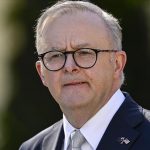




The horrific Bondi Beach terror attack that killed 15 people during a Hanukkah celebration on 14 December 2025 has quickly become not only a national tragedy but also a flashpoint in Australian politics. As the nation mourns, former federal treasurer Josh Frydenberg has dramatically escalated political rhetoric, publicly accusing Prime Minister Anthony Albanese of failing to protect Australians and urging him to accept “personal responsibility” for the deadly attack.
The comments mark a notable intensification in criticism from the opposition and reflect mounting pressure on the Albanese government over its response to antisemitism, extremism and national security.
Frydenberg Places the Blame at the PM’s Doorstep
Standing at a memorial near Bondi Beach, Frydenberg — once one of the country’s most senior Labor rivals — delivered an impassioned speech vehemently challenging the federal government’s leadership. He argued that, while the attack was the act of a radicalised individual allegedly inspired by terrorist ideology, the broader societal environment that led to the tragedy was shaped by government inaction.
Frydenberg asserted that the government had allowed Australia to become “radicalised on his watch” and that Albanese should accept “personal responsibility for the death of the 15 innocent people, including a 10-year-old child”. He framed the attacks not merely as an isolated incident but as evidence of systemic failures in addressing rising antisemitism and extremist sentiment.
Calls for Policy Overhaul and Expanded Powers
Beyond personal criticism, Frydenberg used the speech to outline a sweeping array of policy demands. These included:
- Banning extremist organisations such as Hizb ut-Tahrir.
- Prosecuting hate speech and so-called “hate preachers.”
- Ending prolonged pro-Palestinian protests, which he characterised as “incubators of hate.”
- Tightening immigration screening processes.
- Implementing the full set of recommendations from the anti-Semitism envoy’s report.
- Establishing a royal commission into antisemitism and the Bondi attack.
Frydenberg’s critique also extended to state and federal leadership more generally, urging urgent, unprecedented action to prevent future attacks.
Government Pushback and Strategic Positioning
While Albanese has condemned the Bondi Beach massacre as an “antisemitic and terrorist attack” and pledged legislative reform on gun control and community safety, his government has so far resisted framing the issue in the terms Frydenberg proposes. Albanese has emphasised unity, community support and measured action grounded in policy development rather than partisan spectacle.
Treasurer Jim Chalmers acknowledged Frydenberg’s passion and grief but underscored that the government has already taken “significant steps” to counter antisemitism and violent extremism, claiming further work is underway.
Public Reaction and Community Sentiment
The broader public response has been mixed. Some members of the Jewish community and conservative commentators have echoed Frydenberg’s calls for stronger measures, arguing that the attack exposed weaknesses in government preparedness and societal cohesion. Others caution against conflating unrelated civic protests with violent extremism, stressing that attributing responsibility to government policy risks deepening societal divisions at a time when unity is paramount.
Significantly, Albanese was reportedly not invited to attend the funeral of one of the first victims, Rabbi Eli Schlanger, a fact that political figures in opposition have highlighted as symbolic of broader dissatisfaction with federal leadership.
Opposition Co-alescing Around Tougher Anti-Extremism Stance
Frydenberg is not alone in his critique. Opposition figures, including leader Sussan Ley, have launched initiatives such as a new anti-Semitism task force, arguing that earlier warnings about rising antisemitic sentiment were not adequately heeded. Critics have pointed to recommendations from the anti-Semitism envoy — delivered months ago — as a roadmap that was slow to be enacted, and are now calling for accelerated adoption of those measures.
What was until recently a relatively unified condemnation of the Bondi shooting has, in a matter of days, transformed into a heated political debate on national security, civil liberties, societal trust and government accountability.
The Broader Implications for Australian Politics
Frydenberg’s rhetoric reflects a broader trend in Australian politics: traumatic national events can quickly become arenas for competing narratives about leadership and policy priorities. The challenge for Albanese — and for the nation — will be balancing the urgency of community safety with measured policy responses that do not undermine civil liberties or inflame tensions.
With calls for radical changes to protest laws, immigration screening and educational approaches growing louder, the political fallout from the Bondi massacre is shaping up to be as significant as the tragedy itself. Whether the government will shift its approach in response to this intensifying pressure remains a key question in the coming weeks.
7 years in the field, from local radio to digital newsrooms. Loves chasing the stories that matter to everyday Aussies – whether it’s climate, cost of living or the next big thing in tech.