




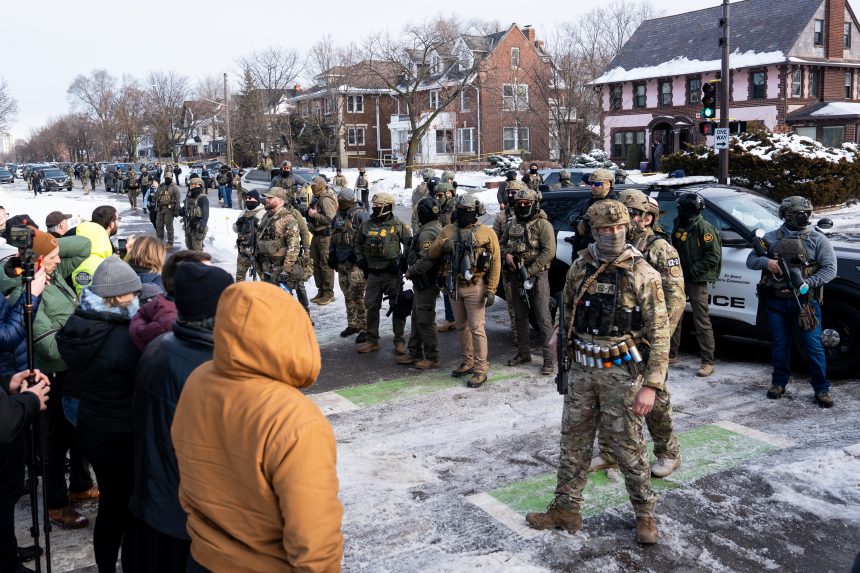
MINNEAPOLIS — After more than three months of intense federal immigration enforcement activity that drew widespread protests, public backlash and national political scrutiny, the immigration enforcement surge in Minnesota is coming to an end, officials announced Thursday. The move marks a significant shift in federal policy on the ground in the U.S. Midwest and closes a chapter of aggressive operations that polarized communities and state leaders alike.
‘Operation Metro Surge’ Began With High Ambition and High Controversy
The initiative, dubbed Operation Metro Surge, began on 1 December 2025 under the Trump administration and involved deploying thousands of federal immigration agents — including officers from U.S. Immigration and Customs Enforcement (ICE), Customs and Border Protection (CBP) and Border Patrol — primarily across the Minneapolis–Saint Paul metropolitan area. Officials said the operation aimed to arrest undocumented immigrants deemed public safety threats and to crack down on alleged fraud involving federal benefit programs.
At its peak, the surge saw roughly 3,000 agents in Minnesota, a deployment that far exceeded the number ordinarily stationed in the state — previously around 150 federal immigration personnel. Over the course of the operation, authorities reported more than 4,000 arrests. Federal officials said the activity “made Minnesota safer” and reduced what they characterised as sanctuary protections for criminal aliens.
Federal Officials Announce Withdrawal of Agents
On Thursday, Tom Homan, the Trump administration’s self-styled “border czar,” announced that the surge would soon conclude and that a significant drawdown of agents was already underway. Homan said he proposed ending the operation and that President Donald Trump agreed, with hundreds of officers already returning to their home stations and more scheduled to depart over the coming week.
Homan maintained that a smaller contingent of federal personnel would remain temporarily to assist with closing out operations and handling ongoing investigations tied to fraud and enforcement cases, but the large, military-style presence that had defined the past months will be greatly reduced.
State Officials and Local Leaders React
The dissolution of the surge comes after sustained opposition from Minnesota’s political leadership and civil society groups. Democratic Gov. Tim Walz and other state leaders repeatedly criticised the federal deployment as heavy-handed and counterproductive. Walz had previously said he expected the operation to end “in days, not weeks and months” following discussions with federal officials.
Local mayors, including Minneapolis Mayor Jacob Frey, said they held constructive conversations with Homan that helped pave the way for a de-escalation of the federal presence. Still, officials acknowledged that rebuilding trust and addressing community concerns will take time.
Public Backlash and Protests Across Minnesota
Federal immigration enforcement in Minnesota sparked some of the most sustained protests the state has seen in years. Activists, community organisations, students and labour groups rallied against the surge, arguing that the operation targeted immigrant communities indiscriminately and contributed to fear and disruption in daily life. Tens of thousands participated in demonstrations demanding an end to the operation and accountability for the deaths of two U.S. citizens, Renée Good and Alex Pretti, who were killed by federal officers during the enforcement campaign.
The protests, including a general strike and shutdown on 23 January 2026, drew national attention and intensified calls from civil rights organisations and lawmakers for an independent review of immigration enforcement practices.
Critics Highlight Civil Rights and Immigration Concerns
Critics of the enforcement surge pointed to allegations of racial profiling, civil rights violations and the detention of individuals without criminal histories — including families and children — as evidence the operation was overly aggressive. Immigration advocates argued that the tactics used by federal agents eroded community trust and strained relationships between local law enforcement and immigrant residents.
Legal challenges also arose, with courts finding that ICE agents had violated numerous court orders in their conduct during the operation. The controversy surrounding Minnesota’s enforcement surge became a flashpoint in broader national debates over immigration policy, enforcement priorities and the appropriate role of federal authorities inside American cities and states.
Legacy and Broader Implications
The winding down of the Minnesota surge may signal a recalibration of federal immigration enforcement strategy at a time when public opinion on the issue remains sharply divided. President Trump’s administration continues to espouse a broader deportation agenda nationwide, even as the localized operation in Minnesota winds down. Federal officials have indicated that immigration enforcement will persist elsewhere, but that future deployments will emphasise improved cooperation with local law enforcement and community stakeholders.
For Minnesota residents and activists, the end of the surge offers relief but also raises questions about how federal and state governments will work together to address immigration and public safety in the future. Residents affected by arrests and detentions will continue to seek legal recourse and support, while community groups have pledged to maintain vigilance to ensure civil liberties are protected.
Looking Ahead
With federal agents withdrawing and the operation officially concluding, the focus shifts to long-term policy discussions and efforts to address the grievances that emerged during the crackdown. State leaders, community advocates and political analysts say it will be critical to assess the human impact of the surge, to consider reforms to immigration enforcement practices, and to prioritise transparency and accountability in how future operations are conceived and executed.
As Minnesota returns to relative normalcy following months of upheaval, the legal, political and social ramifications of this contentious chapter will continue to unfold, shaping how the nation navigates immigration policy and federal-state relations in the years ahead.
7 years in the field, from local radio to digital newsrooms. Loves chasing the stories that matter to everyday Aussies – whether it’s climate, cost of living or the next big thing in tech.