




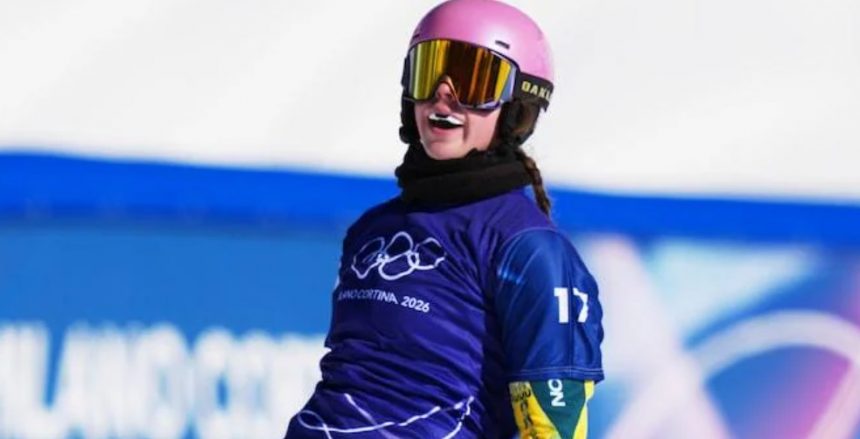
MILANO CORTINA, Italy — Australia added a dramatic second gold medal to its tally at the 2026 Winter Olympic Games on 13 February 2026, as snowboarder Josie Baff produced a stunning performance to win the women’s snowboard cross title. Baff’s victory, sealed in a breathtaking final at Livigno Snow Park, came less than 24 hours after compatriot Cooper Woods claimed gold in men’s moguls, underscoring a remarkable spell for the Australian team at these Games.
Here’s a deep dive into Baff’s pathway to gold, the competition dynamics, and what this means for Australia’s Winter Olympics campaign.
Historic Gold in Snowboard Cross
Baff emerged triumphant in one of the most unpredictable events on the snowboarding programme — women’s snowboard cross, where riders race head-to-head down a bumpy course full of jumps, berms and tight turns. In the big final, the 23-year-old surged past a competitive field to claim the gold medal, holding off strong challenges from elite rivals in a race decided by fractions of a second.
Czech snowboarder Eva Adamczyková, a former Olympic champion, took silver, while Italian star Michela Moioli — the 2018 Olympic gold medallist — earned bronze. The result marked Baff’s first Olympic medal and only the second ever snowboard cross Olympic gold for Australia.
Road to the Podium: From Seedings to Big Final
Baff’s journey to gold was far from straightforward. She qualified in a modest 17th place in the seeding runs, a position that usually does not presage a gold-medal outcome. But once in the knockout rounds, Baff hit her stride, winning early heats and mastering each round with tactical precision and confidence.
Her ability to navigate the chaotic and contact-prone snowboard cross format with both speed and control proved decisive. Baff’s finals performance was marked by a strong start and smart line choices, enabling her to fend off attacks from seasoned competitors and cross the line first in a fiercely contested final.
A Triumph for Australian Snowboarding
Baff’s gold adds to a growing legacy of Australian success in winter sports — particularly in snowboard and freestyle skiing disciplines where the country has carved out international prominence despite limited domestic snow resources. Her victory builds on earlier milestones, including gold by athletes such as Torah Bright, and now features alongside Cooper Woods’ moguls triumph from earlier in these Games.
At 23, Baff has rapidly become one of Australia’s standout winter athletes. A native of Cooma, New South Wales, and raised in Jindabyne, she began snowboarding at a young age and has steadily ascended through the ranks, including success at the Winter Youth Olympics earlier in her career. Her win at Milan-Cortina solidifies her status as an elite competitor on the world stage.
Final Showdown: Contenders and Moments
The women’s snowboard cross final featured an array of experienced and decorated racers.
- Eva Adamczyková (Czech Republic) — a seasoned Olympian with medals from Sochi 2014 and PyeongChang 2018 — provided a major challenge, taking silver behind Baff.
- Michela Moioli (Italy) — a home favourite and former Olympic champion, claimed bronze after a rugged battle.
The competition demonstrated the depth and unpredictability of the field, with split-second decisions and tactical racing shaping the podium finishers.
Celebration and Reaction
Baff’s victory triggered an immediate wave of celebration among Australian athletes, officials and supporters both on the ground at the Olympics and back home. The gold medal not only bolsters Australia’s position on the Winter Games medal table but also injects fresh momentum into a broader national campaign that has exceeded many expectations.
Athletes across the Australian contingent were seen cheering the result, and team officials praised Baff’s resilience and competitive spirit. Her gold adds emotional resonance to Australia’s campaign, symbolising perseverance, peak performance under pressure, and the emergence of a new generation of winter sporting talent.
What This Means for Australia’s Winter Olympics Legacy
With two gold medals secured in quick succession — Cooper Woods in moguls and now Josie Baff in snowboard cross — Australia has enjoyed one of its most successful starts at a Winter Olympic Games in recent history. These results continue a thread of strong performances in snowboarding and freestyle events, a trend that has marked the nation’s winter sport identity.
Looking ahead, Australia’s team still has opportunities in other events to add to its medal haul, while Baff’s triumph is expected to inspire a new generation of young athletes back home.
Looking Ahead: Challenges and Opportunities
As competition continues in other disciplines at the Milano-Cortina Games, attention now turns to remaining events where Australian athletes are positioned to perform. Snowboarders like Mia Clift, who also represented Australia in the snowboard cross, have gained invaluable experience and contributed to the depth of the team, even if they did not reach the podium this time.
Meanwhile, other winter sport stars — in snowboarding, skiing, and sliding events — are poised to chase further success as the Games progress.
Conclusion: A Golden Moment for Australia
Josie Baff’s dramatic and thrilling gold medal in the women’s snowboard cross represents a landmark moment for Australia at the 2026 Winter Olympics, reinforcing the nation’s growing strength in winter sports and strengthening its presence on the global stage. In a final packed with tension, strategy and athletic excellence, Baff skied her way into history — and Australia’s second Winter Games gold will be remembered as one of Milan-Cortina’s standout performances.
7 years in the field, from local radio to digital newsrooms. Loves chasing the stories that matter to everyday Aussies – whether it’s climate, cost of living or the next big thing in tech.