



As Australia’s capital, Canberra is uniquely positioned as the nation’s cultural and historical archive. Unlike cities where museums compete with commercial attractions, Canberra’s major institutions are central to civic life and national identity. Purpose-built, thoughtfully curated, and often free to enter, the city’s museums and galleries offer depth rather than spectacle, rewarding visitors who value context, education, and reflection.
What distinguishes Canberra is not the number of institutions, but their scope and seriousness. Together, they provide one of the most comprehensive cultural experiences in Australia.
National Gallery of Australia: Art as National Narrative
The National Gallery of Australia is the country’s premier visual arts institution and a cornerstone of any visit. Its collection spans Indigenous Australian art, colonial works, modern Australian movements, and significant international pieces.
The Indigenous art collection is particularly important, presenting works not as peripheral artifacts but as central to Australia’s artistic story. The gallery’s scale allows visitors to move from ancient traditions to contemporary practice within a single, coherent narrative.
The surrounding sculpture garden extends the experience outdoors, reinforcing the gallery’s integration with Canberra’s open spaces.
Australian War Memorial: History With Gravity
The Australian War Memorial occupies a unique position between museum, archive, and place of remembrance. It documents Australia’s military history while maintaining a solemn, reflective tone.
Exhibitions are immersive and meticulously researched, combining personal stories with large-scale historical context. The memorial’s design encourages contemplation rather than consumption, making it one of the most emotionally impactful cultural experiences in the country.
Daily ceremonies reinforce its role as a living institution rather than a static display.
National Museum of Australia: Stories of Identity and Place
The National Museum of Australia focuses on social history, identity, and the evolving idea of Australia. Its exhibitions explore Indigenous cultures, migration, environment, and popular culture through narrative-driven displays.
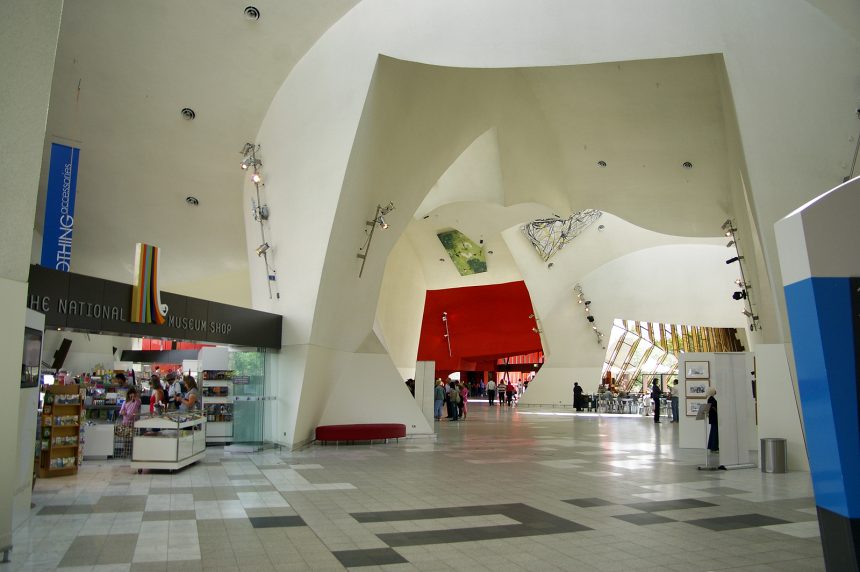
Architecturally distinctive, the museum invites exploration rather than linear viewing. It excels at connecting personal stories to national themes, making complex historical questions accessible without oversimplification.
For visitors seeking context rather than chronology, this museum offers a compelling lens on Australian life.
National Portrait Gallery: The People Behind the Nation
The National Portrait Gallery presents Australia’s history through individuals rather than events. Politicians, artists, activists, athletes, and everyday figures are represented through painting, photography, and multimedia works.
The focus is not celebrity, but contribution. Portraits are accompanied by stories that explain why each subject matters, encouraging visitors to consider how identity and leadership are constructed over time.
The gallery’s calm, contemplative atmosphere contrasts with the scale of larger institutions, making it an ideal place to slow down.
Canberra Museum and Gallery: Local History, Local Voices
While national institutions dominate the city, the Canberra Museum and Gallery offers a more intimate perspective. It explores the city’s development, communities, and creative output, grounding Canberra’s national role in lived experience.
Rotating exhibitions highlight local artists and stories, providing balance to the broader narratives found elsewhere. This focus on place helps visitors understand Canberra not just as a capital, but as a city with its own character.
Museum of Australian Democracy: Politics in Practice
Housed in Old Parliament House, the Museum of Australian Democracy examines how democracy functions in Australia. Rather than celebrating institutions uncritically, it explores debate, protest, reform, and participation.
Interactive exhibits encourage visitors to think about civic responsibility and political engagement, making abstract concepts tangible. The building itself adds historical weight, connecting past governance to contemporary discussion.
What Makes Canberra’s Cultural Institutions Distinct
Canberra’s museums and galleries share several defining qualities:
- Strong emphasis on education, context, and research
- Free or low-cost entry that prioritizes public access
These institutions are designed for citizens as much as tourists, reinforcing their role as public resources rather than entertainment venues.
Planning a Cultural Itinerary in Canberra
Most major museums are clustered around Lake Burley Griffin, making it possible to visit multiple sites over one or two days without excessive travel. The city’s layout encourages unhurried exploration, with green spaces providing natural breaks between visits.
Rather than attempting to see everything, visitors benefit from choosing institutions aligned with their interests — art, history, politics, or social narratives — and allowing time for depth rather than breadth.
A Capital Defined by Culture
Canberra’s museums and galleries reflect the city’s purpose: to preserve, question, and present Australia’s story. They avoid spectacle in favor of substance, offering experiences that reward attention and curiosity.
For travelers seeking insight rather than distraction, Canberra stands apart. Its cultural institutions do not compete for attention — they invite understanding.
7 years in the field, from local radio to digital newsrooms. Loves chasing the stories that matter to everyday Aussies – whether it’s climate, cost of living or the next big thing in tech.