


The glittering city-state of Dubai, long recognised for its soaring skyscrapers, luxury tourism and strategic global connectivity, has found itself thrust into the front lines of a rapidly escalating Middle Eastern conflict. Over recent days, a barrage of Iranian missiles and drones — part of Tehran’s broad retaliation for U.S. and Israeli strikes on Iranian territory — landed in and over Dubai, puncturing the sense of security that has defined the Gulf business and tourism hub for decades. The attacks have coincided with multiple blasts across neighboring capitals, airspace closures, and widespread alarm across civilian populations.
Iranian Retaliation That Reached Dubai
The turmoil began after a joint military offensive by the United States and Israel against targets in Iran, widely reported to include strikes near the residence of Supreme Leader Ayatollah Ali Khamenei and other strategic sites. Tehran responded by launching ballistic missiles and unmanned aerial vehicles at U.S. military facilities and allied states throughout the Gulf.
Among the cities struck in this retaliatory campaign was Dubai — a rare and striking development given the city’s long reputation for stability. State reports and international media confirm that Dubai International Airport sustained damage from the Iranian assaults, prompting immediate suspension of flight operations and triggering airspace closures. Four people sustained injuries at the airport before flights were grounded.
Impact on Infrastructure and Daily Life
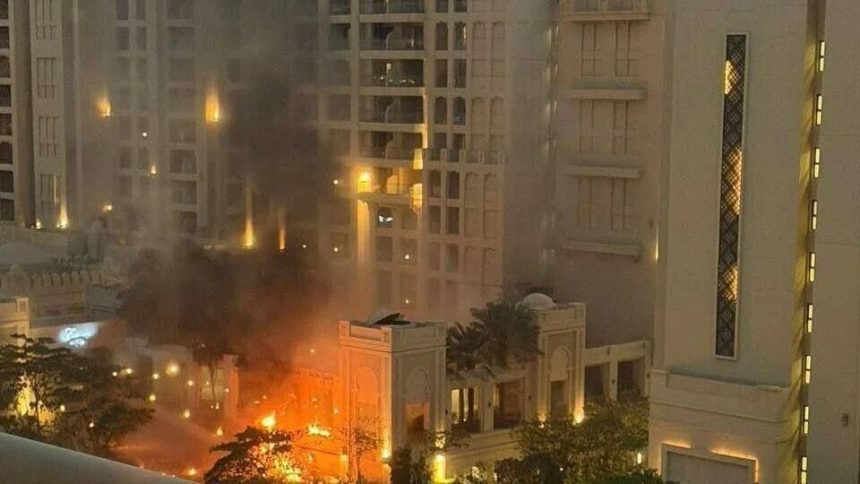
The missile and drone barrage did not limit itself to military targets, according to multiple accounts of debris and intercepts falling over urban areas. Debris from intercepted missiles ignited fires near luxury hotels on the Palm Jumeirah and the iconic Burj Al Arab, while explosions were reported in residential districts, jolting daily life in a city that had never before faced such direct intrusions of warfare.
Residents described the surreal transition from a normal Saturday evening to scenes of alarm and chaos as air defenses engaged incoming threats. Some were caught off guard, mistaking early blasts for fireworks. Others sought shelter in underground car parks or were advised to take refuge in interior spaces to avoid flying debris as emergency alerts sounded.
Security Alerts and Civil Precautions
For the first time in recent memory, the United Arab Emirates government issued urgent emergency alerts, instructing residents and visitors to seek immediate shelter amid fears of incoming missile threats. Homes, hotels and offices activated internal safety protocols as authorities sought to reassure the public while managing the palpable anxiety that grips the city.
In other parts of the emirates, such as nearby Abu Dhabi, air defense systems were similarly activated, and at least one fatality and multiple injuries were reported at the Zayed International Airport during intercept operations — underscoring that the conflict’s impact extends beyond Dubai itself.
Economic Shockwaves: Airports Grounded and Flights Suspended
As Dubai’s airspace closed in the wake of the attacks, Dubai International Airport — one of the world’s busiest aviation hubs — was forced to suspend all passenger and cargo flights. The closure echoed the newfound fragility of regional air corridors, affecting not just inbound and outbound travel from Dubai, but also long-haul connections between Asia, Europe and Australia reliant on Gulf transit points.
The grounding of flights, coupled with emergency infrastructure repairs and security advisories, has delivered an immediate economic blow to the city’s key sectors. Tourism, hospitality and global business travel — central to Dubai’s GDP — face upheaval as global carriers reroute or cancel services and corporate itineraries are upended.
Civilian Reactions and Rising Anxiety
Strangers to conflict, many civilians — expatriates, tourists and local residents alike — were forced to reckon with the frightening reality of urban warfare touching down in a city once viewed as insulated from regional unrest. In anecdotal accounts, community panic led to lines at supermarkets and shops as people stocked up on essentials, mirroring the instinctive human response to crisis.
The international character of the city — home to millions of foreign workers and visitors from around the world — has compounded the psychological impact, with families and embassies scrambling to contact loved ones or provide guidance amid the uncertainty.
UAE Government’s Diplomatic and Security Response
UAE officials have publicly condemned the strikes as a “flagrant violation of national sovereignty and international law”, stressing their right to defend civilians and infrastructure in the face of unprovoked attacks. Calls for restraint and impartial international inquiry have accompanied the government’s official responses.
The situation has also drawn broader regional diplomatic responses, with leaders from neighboring Gulf states urging a return to negotiation and de-escalation, even as air defenses remain on high alert.
Strategic Implications and Future Risks
The strikes on Dubai represent a chilling departure from traditional conflict theatres in the Middle East, where confrontations have typically occurred within the boundaries of warring states or proxy battlefields. The use of ballistic missiles and drones that can reach UAE territory underscores the widening geographical scope of the confrontation — and highlights the vulnerabilities even of states previously considered secure.
Analysts warn that continued hostilities risk further destabilising a region that is key to global energy markets, international trade and global security architecture. With major air links halted and foreign nationals in the region unsure of travel or evacuation options, the fear is that even short-lived escalations could have long-lasting economic and diplomatic consequences.
What Comes Next
As tensions remain elevated, the immediate priorities for Dubai and its residents are public safety, infrastructure protection and clear communication from authorities about ongoing threats and precautions. The reopening of airports and the restoration of normal life will depend on both diplomatic developments and the broader de-escalation of hostilities in the Middle East.
From a city that has long symbolised stability and futuristic ambition, Dubai’s sudden descent into a conflict zone is a stark reminder of how quickly geopolitical turbulence can upend lives and disrupt global networks — even in places once considered beyond the reach of war.
7 years in the field, from local radio to digital newsrooms. Loves chasing the stories that matter to everyday Aussies – whether it’s climate, cost of living or the next big thing in tech.