



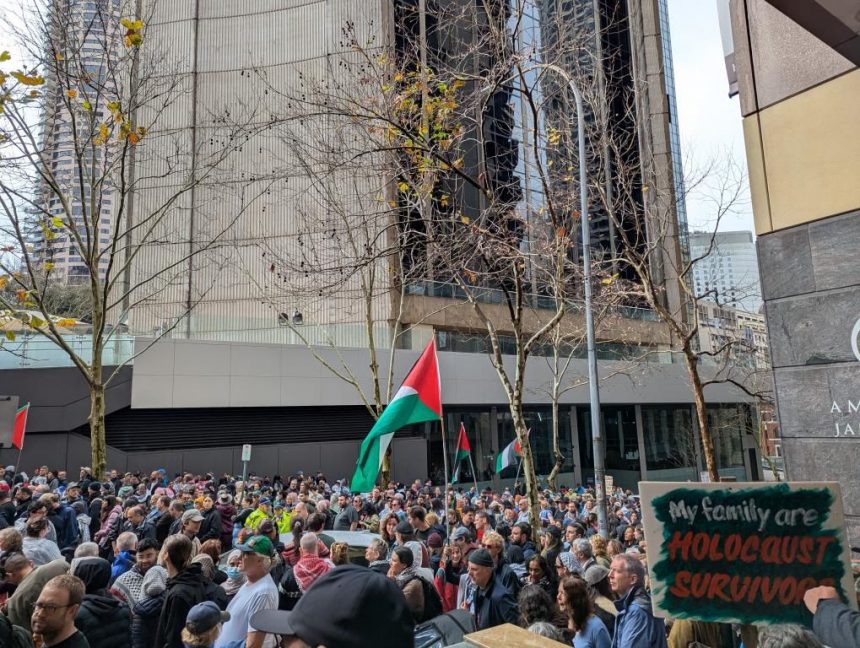
SYDNEY — Violent scenes broke out in Sydney on Monday as New South Wales (NSW) Police used pepper spray and made multiple arrests while confronting pro-Palestinian demonstrators protesting the visit of Israeli President Isaac Herzog. The clash — one of several protests held nationwide — highlights deep public divisions over Israel’s policies and Australia’s decision to host Herzog amid ongoing conflict in Gaza.
Protests Erupt Amid High-Profile State Visit
Israeli President Herzog is in Australia on a four-day official visit, invited by the federal government following the December 2025 Bondi Beach massacre, where 15 people were killed at a Jewish Hanukkah event. Herzog’s visit includes commemorative events and meetings with victims’ families, but it has also ignited widespread demonstrations in Sydney, Melbourne, Canberra, Brisbane, Perth and Darwin.
In Sydney — where thousands gathered near Town Hall — large pro-Palestinian rallies escalated after restrictions imposed by the NSW government blocked a planned march to the state parliament, based on a “major event” designation that granted police expanded powers to control large crowds.
Police Use Pepper Spray and Make Arrests
As tensions grew, police repeatedly deployed pepper spray (capsicum spray) to disperse demonstrators who defied orders to leave key areas and attempted to breach police lines. Officers also made dozens of arrests, with NSW Police reporting 27 people arrested in Sydney, including several for allegedly assaulting officers.
Paramedics treated a number of participants after they were pepper-sprayed, though authorities said there were no initial reports of serious injuries. Footage shared on social media showed scenes of compromised marches, physical confrontations and police efforts to push back crowds along George Street.
Legal Restrictions and “Major Event” Powers
The unrest followed a failed legal challenge by the Palestine Action Group to overturn protest restrictions connected to Herzog’s visit. A Sydney court upheld the government’s classification of the visit as a “major event” — a designation that limits where and how protests may take place in order to protect public order and the safety of visiting dignitaries.
Police repeatedly instructed the rally crowd to disperse after speeches concluded. When demonstrators chanted slogans like “we will march” and attempted to push through barriers toward restricted zones, clashes intensified.
Broader National Protests and Security Measures
Beyond Sydney, pro-Palestinian demonstrations drew significant crowds in other states and territories. In Melbourne, a large march drew thousands of participants, while Perth and Darwin saw peaceful rallies expressing opposition to the state visit and to broader geopolitical grievances.
NSW authorities had deployed around 3,000 police officers across Sydney to manage projected unrest and to ensure both protest safety and the security of diplomatic engagements during the visit. Increased policing is part of an ongoing operation partly shaped by broader tensions following attacks and social divisions within the community.
Voices and Reactions from Both Sides
Supporters of Herzog’s visit — including many in Sydney’s Jewish community — have welcomed his presence as a gesture of solidarity following the Bondi Beach massacre, highlighting a need to stand against antisemitism and strengthen Australia–Israel ties. Herzog himself has condemned hatred and emphasised unity and resilience during his visit.
Conversely, critics view the state visit and police response as suppressive of dissent. Protest organisers and civil liberties groups condemned the use of pepper spray and restrictions on assembly, framing the confrontations as an erosion of democratic protest rights. Some protesters criticised Herzog’s policies toward Palestinians and linked their grievances to broader conflict dynamics in the Middle East.
Ongoing Debate Over Civil Liberties and Public Safety
The clashes in Sydney have intensified debate in Australia around the balance between public safety, freedom of expression and diplomatic courtesy. Authorities argue that measures restricting movement and empowering police were necessary to prevent larger violent confrontations during such a high-profile visit. Protesters and some political figures counter that such restrictions undermine democratic engagement and penalise political speech.
As Herzog’s visit proceeds — including planned stops in Melbourne and Canberra before he departs later this week — officials will continue to navigate the complex terrain of managing public demonstrations amid competing calls for law and order, diplomatic respect and civil liberties.
7 years in the field, from local radio to digital newsrooms. Loves chasing the stories that matter to everyday Aussies – whether it’s climate, cost of living or the next big thing in tech.