






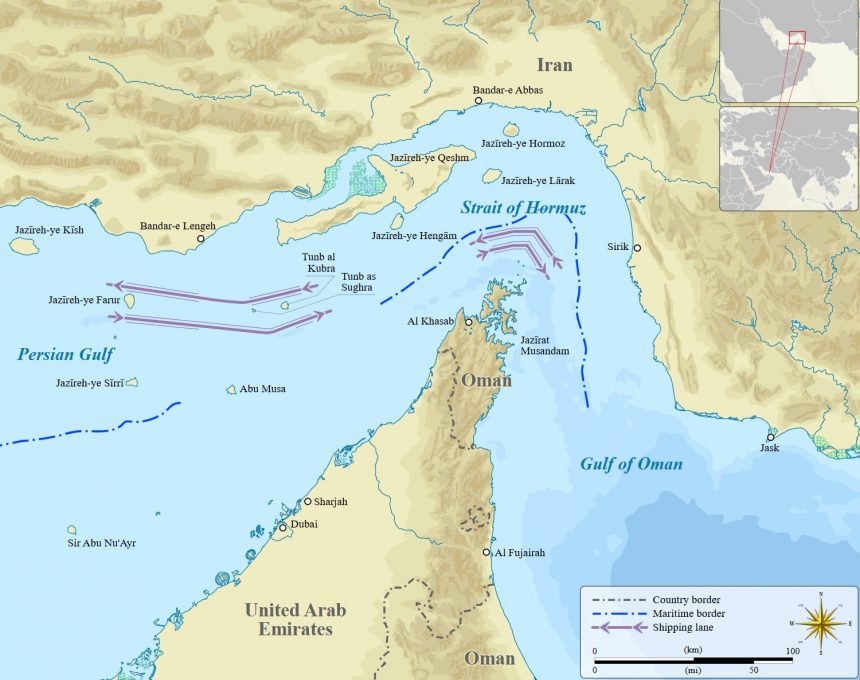
In the wake of escalating conflict in the Middle East, one of the world’s most strategically important maritime corridors — the Strait of Hormuz — has seen significant disruption. The strait, a narrow waterway linking the Persian Gulf to the Gulf of Oman and beyond, is crucial for global energy supply. Recent hostilities and interruptions to traffic through this passage have triggered sharp reactions in commodity markets and heightened fears of renewed inflationary pressures around the world. Analysts warn that a prolonged disruption could reverberate far beyond energy markets into nearly every aspect of everyday life.
Why Hormuz Matters: A Critical Chokepoint in Global Energy Trade
The Strait of Hormuz is not just another shipping lane — it is the artery of global oil and gas transport. Around 20% of the world’s seaborne crude oil and liquefied natural gas (LNG) transit through this narrow strait every day, linking key producers in the Gulf to consumers in Asia, Europe, and beyond. There are few viable alternatives; pipelines have limited capacity compared to the vast volumes that move by sea.
Because of this central role, any slowdown, partial closure, or risk of stoppage instantly tightens global energy supply. For traders, oil markets are forward-looking: fear itself — even without a complete closure — can spark price spikes.
Immediate Market Reactions: Oil and Gas Prices Climb
Since hostilities escalated, global energy markets have reacted sharply:
- Crude oil benchmarks like Brent and WTI have climbed significantly, with Brent briefly rising above $80 per barrel in early sessions as tanker traffic near the strait dropped and insurers raised war-risk premiums.
- Natural gas and LNG markets are also tightening, especially in Europe and Asia, where inventories are already at historically low levels after a cold winter and rising demand.
- Shipping firms have rerouted vessels or suspended transits, and hundreds of tankers have anchored outside the strait, further constraining supply flows.
These market moves reflect both physical disruptions to supply and the psychological impact of heightened geopolitical risk.
Rising Fuel Costs for Households and Businesses
Oil price spikes impact consumers quickly and visibly. Higher crude prices usually mean:
- More expensive gasoline and diesel at the pump, lifting direct costs for commuting, transport, and logistics.
- Higher freight and shipping costs for goods that are transported long distances, adding to inflationary pressures on consumer prices.
- Increased costs for heating and electricity in regions that depend on imported fuels.
Economists warn that sustained energy cost increases can ripple through economies, widening existing cost-of-living pressures — especially in countries already grappling with somewhat elevated inflation.
Broader Inflationary Risks and Economic Slowdowns
Economists point out that a prolonged crisis at Hormuz could resemble a stagflationary shock — where inflation rises even as economic growth slows. This pattern was seen after the Russian invasion of Ukraine in 2022, when energy prices soared and central banks were forced to raise interest rates to tame inflation at the expense of growth.
With energy feeding directly into manufacturing, transportation, agriculture, and utilities, broadening price pressures are almost unavoidable in a sustained closure scenario. Central banks, already under pressure to balance inflation with growth, may find themselves in an increasingly difficult position.
Regional Vulnerabilities — Asia and Europe in the Spotlight
Different regions will feel the knock-on effects in varying degrees:
- Asia, which imports the bulk of its oil and gas from the Middle East, is highly vulnerable to supply disruptions and may face tougher choices between securing energy and maintaining affordable prices.
- Europe, with already tight gas inventories, would likely see further upward pressure on prices, potentially worsening energy affordability for households and businesses.
Even countries with significant domestic energy exports are not immune, as global price dynamics influence domestic markets and consumer costs.
Supply Chain and Logistical Pressures
Beyond fuel, oil and gas are fundamental inputs for the modern industrial system. Higher energy costs can elevate:
- Manufacturing and transport expenses, contributing to higher consumer goods prices.
- Fertilizer and agricultural inputs, which often rely on LNG, especially in Asia.
- Chemical and industrial products, which use oil derivatives as feedstocks.
In this era of tightly interlinked supply chains, higher energy prices can propagate quickly into broader inflation.
Policy Responses and Strategic Reserves
Governments and central banks may respond with a mix of fiscal and monetary tools:
- Releasing strategic petroleum reserves to ease supply constraints.
- Fuel subsidies or tax cuts to cushion household impact.
- Monetary tightening or rate holds to balance inflation risks with growth needs.
Such interventions carry political and economic trade-offs, particularly in countries where public finances are already strained.
Global Economic Resilience and the Risk of Spillovers
Past shocks have shown that well-diversified economies can absorb some volatility. However, the unique role of the Strait of Hormuz — as a chokepoint for a fifth of global energy markets — means any sustained disruption carries systemic risk.
If tensions continue, analysts warn that markets could tighten further, pushing inflation higher and potentially slowing growth globally.
In Summary
Disruptions to the Strait of Hormuz are more than a regional flashpoint. They strike at the heart of global energy markets and, by extension, the global economy. The immediate impact — rising oil and gas prices — feeds into broader cost-of-living pressures through higher fuel costs, increased prices for goods and services, and renewed inflationary strains. For policymakers, managing the fallout will require balancing inflation control with support for households and businesses already feeling the strain of an expensive energy market.
7 years in the field, from local radio to digital newsrooms. Loves chasing the stories that matter to everyday Aussies – whether it’s climate, cost of living or the next big thing in tech.