




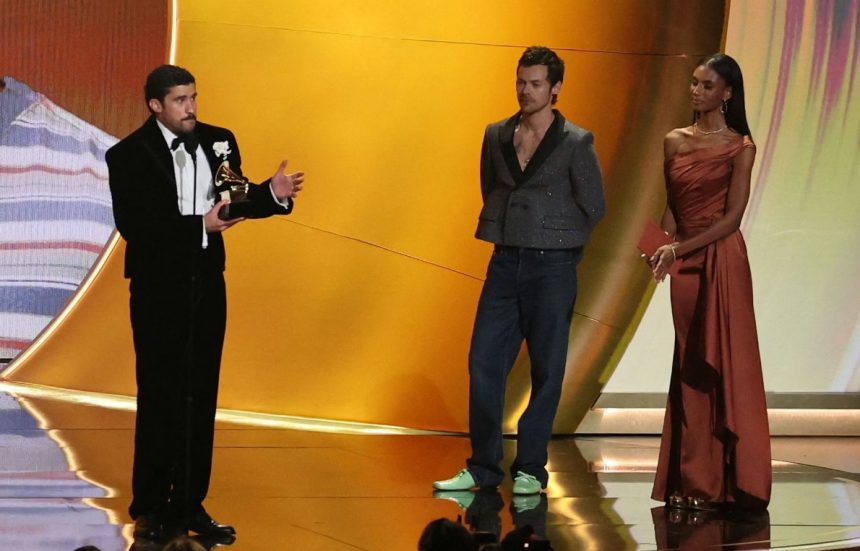
At the 68th Annual Grammy Awards in Los Angeles, Puerto Rican superstar Bad Bunny turned a career-defining night into a powerful political statement, making history both musically and socially as artists across the ceremony protested against U.S. Immigration and Customs Enforcement (ICE). What began as a celebration of musical achievement evolved into one of the most talked-about cultural moments of the year, with performers using the platform to decry immigration enforcement policies and champion migrant rights.
Historic Grammy Wins for a Spanish-Language Album
Bad Bunny, whose given name is Benito Antonio Martínez Ocasio, added a landmark victory to his résumé by winning Album of the Year for Debí Tirar Más Fotos, making it the first Spanish-language record in Grammy history to earn the Recording Academy’s top prize.
Earlier in the evening he had already secured Best Música Urbana Album, adding to previous wins and underscoring the global reach of his music. The success marked a cultural milestone for Latin music and reaffirmed Bad Bunny’s position as one of the most influential artists in the world today.
Turning Triumph Into Protest: ‘ICE Out’
When Bad Bunny took the stage to accept the Best Música Urbana Album award, he opened his speech with a pointed political message, foregoing the traditional thank-you list to focus first on critiquing U.S. immigration enforcement. “Before I say thanks to God, I’m gonna say ‘ICE out,’” he declared, drawing a sustained standing ovation from the crowd.
He framed his remarks around the humanity of migrants and the immigrant experience, rejecting dehumanizing rhetoric. “We’re not savage, we’re not animals, we’re not aliens,” Bad Bunny said. “We are humans and we are Americans.”
The singer urged audiences to counter hate with love, emphasizing empathy and unity in a deeply divisive political climate that has seen heightened immigration enforcement and public outcry.
Broader Grammy Night of Political Expression
Bad Bunny was not alone in using the Grammy stage to voice political concerns. Billie Eilish, who won Song of the Year for “Wildflower,” also made her stance clear during her acceptance speech, asserting that “no one is illegal on stolen land,” and directly challenging the tactics and moral basis of ICE enforcement.
Many artists and attendees wore “ICE Out” pins on the red carpet, visually amplifying the protests. Performers and winners including Gloria Estefan, Kehlani, and Olivia Dean added their voices to the night’s theme of immigration solidarity and advocacy.
Best New Artist winner Olivia Dean referenced her immigrant heritage in her speech, calling immigrants “people who deserve to be celebrated” and highlighting the courage of those who leave home in pursuit of a better life.
Cultural And Political Context of the Protest
The Grammys unfolded against a backdrop of intensifying national debate over immigration policy and enforcement actions by ICE, including controversial raids and high detention figures that have sparked protests across the United States. Many artists and activists have linked these policies to broader issues of social justice and human rights, framing their Grammy speeches as part of a wider cultural resistance.
Bad Bunny’s remarks resonate with his broader activism. In recent months, he has openly criticized immigration enforcement and hinted at the impact such policies have had on his decisions around performances and tours within the U.S.
Reactions and Aftermath
The Grammy moment generated widespread attention across social media and news outlets, with fans and critics alike dissecting the intersection of entertainment and political protest. Supporters hailed Bad Bunny and other artists for leveraging a high-profile platform to raise awareness and challenge federal policy, while detractors argued that award shows should remain apolitical. Analysts say the moment reflects broader cultural tensions in America, where artists increasingly see their roles as advocates as inseparable from their work as entertainers.
As Bad Bunny prepares to headline the upcoming Super Bowl halftime show, the spotlight on his political views and artistic influence is growing. His Grammy speeches have ensured that the conversation around immigration enforcement and human rights will remain at the forefront of cultural discourse heading into the rest of 2026.
7 years in the field, from local radio to digital newsrooms. Loves chasing the stories that matter to everyday Aussies – whether it’s climate, cost of living or the next big thing in tech.