




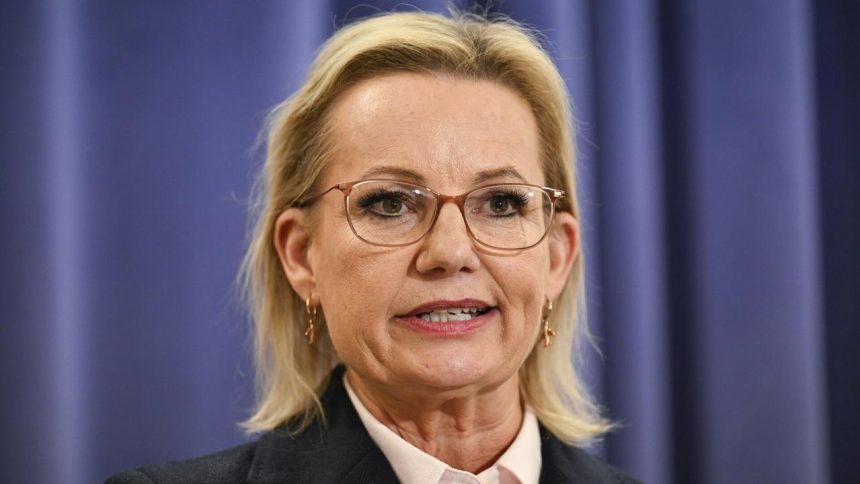
Canberra — Australia’s federal opposition leader, Sussan Ley, is confronting mounting pressure from within her own party following the high-profile resignation of senior Liberal MP Angus Taylor from the shadow frontbench, a move that paves the way for a long-anticipated leadership challenge. The internal turmoil has exposed deep rifts in the governing coalition and ignited urgent questions about the future direction of the Liberal Party as it struggles for relevance amid slumping public support.
Leadership Resignation Sparks Political Upheaval
On 11 February 2026, Angus Taylor — the Liberal Party’s shadow defence minister and a key figure on the conservative right of the party — formally resigned from his frontbench position ahead of what is expected to become a full-blown leadership contest. In sharp remarks, Taylor said he no longer believed Ley was capable of steering the party through its current challenges and argued that Australia’s main opposition must urgently restore credibility and direction.
While Taylor stopped short of immediately calling for a formal leadership spill, his departure significantly weakens Ley’s grip on power and signals a concerted effort among influential party members to force a leadership change within days. Supporters close to Taylor insist a party room vote to open the leadership position is imminent, likely before the end of the week.
Deepening Factional Splits Within the Liberal Party
Taylor’s resignation highlights longstanding divisions within the Liberal Party over strategy, ideology and electoral appeal. Critics of Ley argue that under her leadership the party has drifted without clear policy direction and has been unable to effectively counter the incumbent Labor government’s legislative agenda. Taylor and his supporters have pointed to poor polling, loss of voter trust and electoral setbacks as grounds for urgent change.
Moderate Liberals loyal to Ley have countered that the party needs unity and stability, warning that chaotic leadership struggles risk further eroding public confidence. Some senior members have urged members to focus on policy reform and party renewal rather than internal strife, though opinion within the party appears sharply divided.
Polling Woes and Strategic Challenges
The leadership crisis comes against the backdrop of dismal polling for the Coalition. Recent data shows the Liberal Party’s primary vote languishing at historically low levels, trailing significantly behind both the governing Australian Labor Party and rising minor parties such as One Nation. Analysts say these figures have intensified frustration within the party room and emboldened challengers who argue that Ley’s leadership is no longer electorally viable.
Political commentators also point to strategic missteps on key policy fronts — including economic messaging and public safety issues — as factors that have sapped the party’s momentum. The leadership vacuum, some observers suggest, is symptomatic of deeper uncertainty about the party’s identity and its ability to connect with voters.
Coalition Stability and Broader Opposition Dynamics
The Liberal leadership tussle is happening amid wider political turbulence. The long-standing coalition between the Liberals and National Party of Australia only recently reunited after a temporary split over disagreements on federal hate speech laws, exposing lingering fissures within the broader conservative movement. Those tensions have added complexity to the leadership contest and could shape negotiations over future policy alignments.
Within the party room, senior figures are acutely aware that internal disunity may weaken the Coalition’s capacity to hold the government to account, particularly on issues where public sentiment is fragmented. The coming days are expected to see intense consultations between MPs as factions mobilise support for or against Ley’s continuation as leader.
National Political Implications
Beyond internal party politics, the leadership challenge is attracting attention from the broader Australian electorate. Opposition instability offers potential dividends to the governing Australian Labor Party, which has sought to position itself as a stable alternative amid economic and social challenges. Labor frontbenchers have seized on Liberal disarray in parliamentary chambers, turning it into a talking point in debates over policy competence and political maturity.
Public reaction has been mixed, with some commentators arguing that a leadership renewal could reinvigorate the opposition, while others warn that protracted infighting may further alienate centrist voters. Polling experts note that leadership change alone may not be sufficient to reverse broader trends unless accompanied by a compelling policy platform and more disciplined messaging.
What Comes Next
Legislative and party rules in Australia mean that a leadership spill — if formally called — requires written support from multiple members of the party room and the leader’s agreement to schedule a vote. Current expectations are that this process will unfold rapidly in the coming days, with both camps racing to compile support among the Liberal MPs and senators.
If Taylor or another challenger secures a majority, Ley would likely be replaced at a party room ballot, triggering broader reshuffles in the shadow cabinet. If she survives, her leadership will nonetheless face continued scrutiny and pressure as the Liberals attempt to consolidate their position as the principal opposition in federal politics.
The unfolding leadership crisis in Australia’s opposition marks a pivotal moment for the Liberal Party as it seeks to redefine its direction and electoral appeal ahead of future federal contests. Whether turmoil leads to rejuvenation or deeper fragmentation remains an open question with significant implications for the country’s political landscape.
7 years in the field, from local radio to digital newsrooms. Loves chasing the stories that matter to everyday Aussies – whether it’s climate, cost of living or the next big thing in tech.