




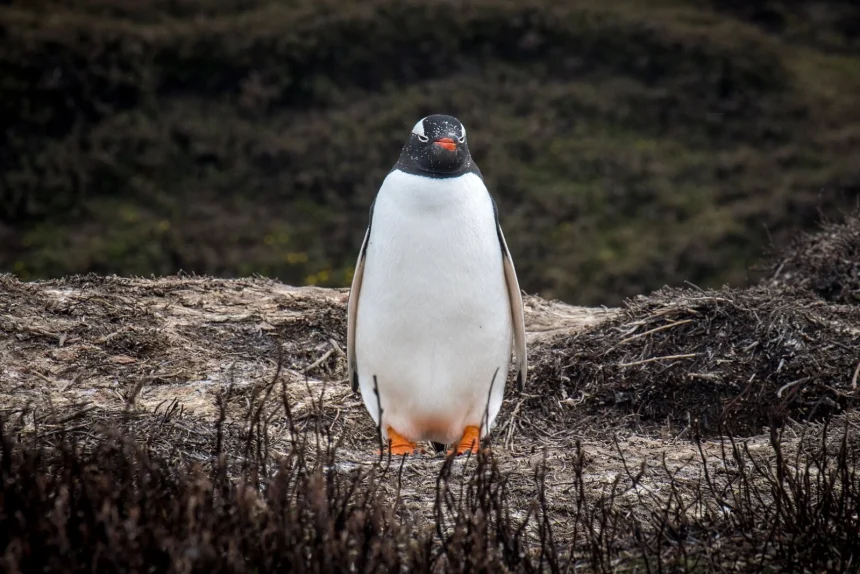
Gentoo penguins on Australia’s remote external territory of Heard Island have become the first bird species on Australian territory confirmed to be infected with the H5N1 strain of avian influenza, scientists have reported. The discovery deepens concerns about the global spread of the highly pathogenic virus and its impact on fragile wildlife populations.
The virus — which has devastated bird populations across much of the world — was confirmed after samples were collected during scientific operations on the island, located over 4,000 km southwest of Perth in the Southern Ocean. Alongside gentoo penguins, earlier testing identified the virus in other species including southern elephant seals and Antarctic fur seals.
Conservationists have described the finding as a grave development, while researchers emphasise the importance of rigorous surveillance and biosecurity measures to monitor and mitigate further spread.
The Significance of the H5N1 Spread
The detection of H5N1 in gentoo penguins is noteworthy because it marks the first confirmed case in birds on Australian territory, highlighting that the ambitious global spread of this avian influenza strain now reaches ecosystems at the edge of the continent.
H5N1 — a subtype of highly pathogenic avian influenza — has been responsible for widespread mortality among birds and mammals globally and is considered one of the most consequential animal disease outbreaks of recent years. Experts have documented its spread across Europe, Asia, Africa and the Americas, with cases reported in wild birds, poultry and a range of mammals.
Although Oceania remained relatively insulated compared with other regions, reports from neighbouring sub-Antarctic islands and Antarctic ecosystems suggested that H5N1 was inching ever closer. Some researchers had warned that its arrival could have severe consequences for wildlife that had not previously encountered the virus.
Impact on Gentoo Penguins and Other Species
Gentoo penguins (species Pygoscelis papua) are widespread in the Southern Ocean and are known for their distinctive white bonnet-like head stripe and bright orange bill. They inhabit islands and seacoasts where dense colonies make social and breeding behaviours possible — but these gatherings also facilitate disease transmission among birds.
The confirmed H5N1 infection in these penguins raises alarm for several reasons:
- Susceptibility of dense colonies: Penguin colonies often number in the thousands, presenting ideal conditions for rapid viral spread once the pathogen is introduced.
- Threat to other native species: Beyond penguins, endemic seabirds such as cormorants and sheathbills, as well as marine mammals that rely on healthy bird populations, may be at risk.
- Broader ecological consequences: Disease outbreaks can trigger cascading effects across ecosystems, potentially threatening breeding success, population viability and food-web dynamics.
Wildlife scientists have pointed out that many sub-Antarctic and Antarctic species have limited exposure to influenza viruses, potentially leaving them less immune and more vulnerable to illness and mortality.
Government and Research Responses
Government departments and scientific organisations are closely tracking the situation. Australian authorities have stressed that mainland Australia remains officially free of the highly pathogenic H5N1 strain, but the emergence on Heard Island presses the urgency of preparedness and surveillance strategies.
Over recent years, Australian agencies have invested in biosecurity measures and wildlife health monitoring to support early detection of diseases in both livestock and native fauna. These programmes include testing of wildlife samples, engagement with international research partners and investment in diagnostic infrastructure.
Meanwhile, conservation groups have urged for enhanced protection measures specifically designed to safeguard vulnerable populations in isolated ecosystems such as sub-Antarctic islands. They argue that regular health surveillance, limits on human disturbance and tighter controls on wildlife interactions are essential components of a comprehensive response.
Scientific Worried Outlook for Biodiversity
Experts warn that the arrival of H5N1 among penguins on Australian territory may foreshadow wider impacts if left unchecked. H5N1 has already caused significant mortality events in seabirds elsewhere, and the potential escalation into breeding colonies and other avian populations is a concern.
In addition to birds, the virus’s ability to infect mammals — documented in multiple regions — contributes to anxiety about its ecological footprint. Recent studies indicate H5N1 has infected marine mammals such as seals, illustrating the breadth of species susceptible to this strain.
Although human infection with the clade currently circulating in wildlife remains rare, scientists emphasize the importance of vigilant monitoring under a “One Health” approach, which recognises the interconnectedness of human, animal and environmental health.
Preparing for Future Outbreaks
The spread of H5N1 into sub-Antarctic ecosystems reinforces calls for ongoing investment in disease preparedness and research. This includes expanding surveillance networks, supporting rapid laboratory diagnostics, and enhancing international cooperation on avian disease monitoring.
Researchers also underscore the need for long-term ecological studies to assess the full impacts of avian influenza outbreaks on wildlife populations and their habitats, particularly in regions as remote and sensitive as Heard Island.
As the global outbreak continues to evolve, the confirmation of H5N1 in gentoo penguins on Australian territory marks a significant and concerning milestone, spotlighting the pervasive threat bird flu poses to biodiversity and the importance of unified scientific and conservation action.
7 years in the field, from local radio to digital newsrooms. Loves chasing the stories that matter to everyday Aussies – whether it’s climate, cost of living or the next big thing in tech.