



Renewed Violence After Border Clashes
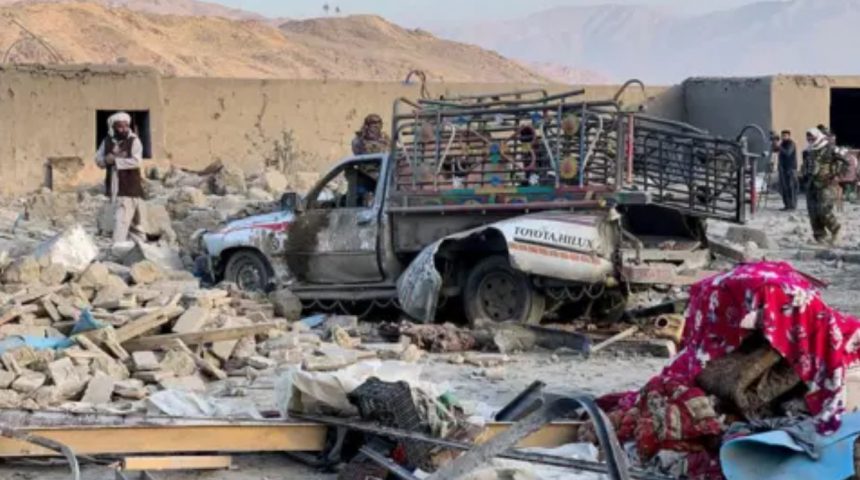
Pakistan and Afghanistan have plunged into a severe crisis after a series of cross-border clashes and airstrikes that mark one of the most dramatic escalations in decades between the two neighbours. On 27 February 2026, Pakistan conducted airstrikes on multiple Afghan locations including the capital Kabul, Kandahar and Paktia provinces in a sharp retaliation against what Islamabad described as “unprovoked fire” from the Afghan side. Afghan forces said their own offensive operations against Pakistani troops along the Durand Line — the irregular 2,600 km frontier — triggered Pakistan’s military response.
Hours after the strikes, Pakistani Prime Minister Shehbaz Sharif declared that the country’s armed forces are fully capable of crushing any hostile ambitions, underscoring Islamabad’s determination to confront what it sees as a growing threat from the Afghan Taliban government and allied militant groups.
Government Rhetoric: ‘Open War’ and Crushing Aggression
Pakistan’s Defence Minister Khawaja Mohammad Asif publicly stated that Islamabad’s “patience has reached its limit” and that the nation now finds itself in what he described as an “open war” with Afghanistan following the latest exchanges of fire. Asif’s comments — made on social media — reflected a stark shift in rhetoric and signalled a willingness to broaden military action beyond isolated border skirmishes.
The strikes were officially dubbed Operation Ghazab Lil Haq, or “Wrath for the Truth,” by Pakistan’s military. According to Pakistani sources cited in media reports, the operation targeted Taliban military infrastructure and was advertised as a decisive response to cross-border aggression. Afghanistan’s ruling Taliban government condemned the raids as violations of sovereignty and vowed to respond “at a suitable time.”
Casualty Claims and Conflicting Accounts
Information emerging from both sides has been sharply contradictory. Islamabad officials claimed that Pakistan’s strikes inflicted significant damage on Taliban positions, including multiple military posts and command facilities, resulting in dozens of Taliban fighters killed and many more wounded, though exact numbers vary by source. Afghan officials, for their part, alleged that Pakistani strikes caused civilian casualties and damage to non-military structures, and claimed they had inflicted heavy losses on Pakistani forces in return.
These conflicting casualty figures — a common feature in cross-border conflicts — make independent verification difficult, but both capitals maintain vastly different narratives about the intensity and impact of the recent exchanges.
Background: Long-Running Tensions and Recent Triggers
Relations between Pakistan and Afghanistan have been tense for years, rooted in mutual accusations over militant sanctuaries and insurgent movements, particularly along the porous Durand Line. Islamabad has repeatedly accused Afghanistan’s Taliban government of harbouring militants, including members of the Tehrik-e-Taliban Pakistan (TTP) and affiliates like Islamic State – Khorasan Province (ISKP), who have carried out deadly attacks inside Pakistan. Kabul has denied these claims and insists it has no formal ties to groups targeting Pakistan.
The latest flare-up follows recent militant attacks inside Pakistan, including a suicide bombing in the Bajaur District in mid-February that killed over a dozen Pakistani security personnel, which Islamabad has linked to TTP elements operating from Afghan territory.
Regional Fallout and Diplomatic Concerns
The rapid escalation has drawn international attention, with the United Nations and other diplomatic actors urging restraint and the protection of civilians. There are fears that unchecked military escalation could destabilise an already fragile region, displacing populations and reversing fragile gains made under past ceasefire agreements negotiated by mediators such as Qatar and Turkey.
Former Afghan President Hamid Karzai weighed in from Kabul, condemning Pakistan’s military actions and framing them as aggression against the Afghan people, vowing that Afghans would defend their homeland against external attacks.
Strategic Implications for Both Nations
For Pakistan, Sharif’s and Asif’s comments about crushing aggressive ambitions reflect domestic pressures to respond forcefully to militant threats and public expectations for security. Islamabad’s reliance on its air force and frontier corps units, supported by ground operations, underscores a broader strategic posture that blends defensive and offensive measures in response to insurgent threats.
Afghanistan’s Taliban government, which assumed power in 2021, faces the dual challenge of asserting control internally while managing increasingly fraught external relations. The intense border clashes threaten to undermine its claims of stability and further complicate diplomatic efforts with neighbours and international partners.
Humanitarian Risks and Civilian Impact
Beyond military considerations, the escalation raises serious humanitarian concerns. Border violence and airstrikes near population centres like Kabul and Kandahar carry the risk of significant civilian casualties, displacement and disruption of essential services, particularly in underserved areas where conflict compounds existing vulnerabilities. International humanitarian agencies have stressed the importance of safeguarding non-combatants and ensuring that any military operations comply with international law.
Outlook: Diplomacy Versus Militarisation
As tensions continue to simmer, the prospects for a diplomatic resolution remain uncertain. While past negotiation efforts have seen intermittent ceasefires and talks, Islamabad’s recent language about open conflict and Sharif’s vow to “crush” aggression against Pakistan point to an era of heightened military assertiveness. Whether cooler heads prevail and diplomatic channels can be reopened — potentially with the involvement of neutral mediators — will be crucial in determining whether the conflict settles back into tense stalemate or spirals into broader confrontation.
7 years in the field, from local radio to digital newsrooms. Loves chasing the stories that matter to everyday Aussies – whether it’s climate, cost of living or the next big thing in tech.