






Byline: Reporting and analysis
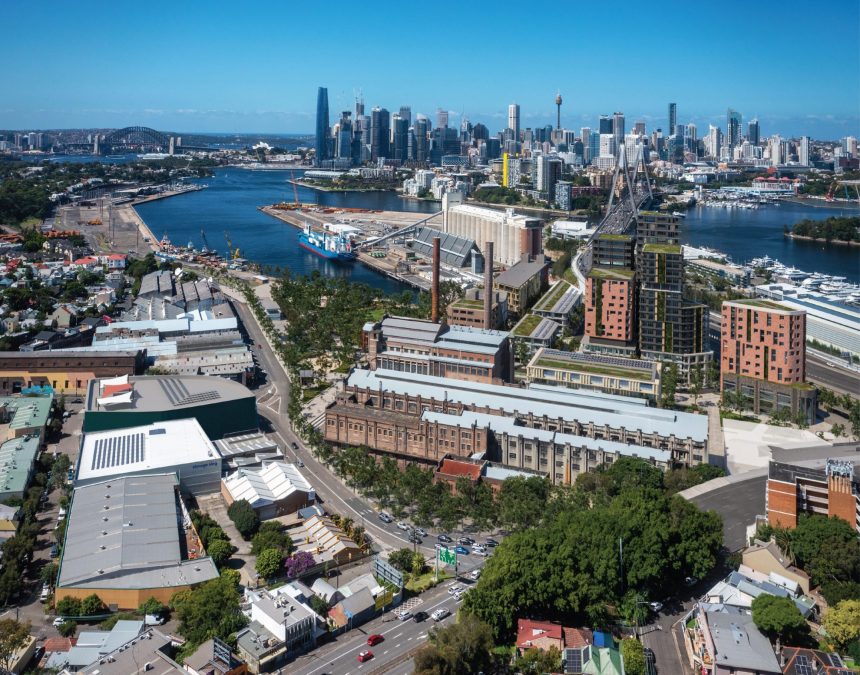
Sydney will gain what officials are calling its first new inner-city suburb in decades after the long-running industrial site of Glebe Island was rezoned and rebranded as the Bays West precinct. The announcement, led by the New South Wales Government and its planning agencies, marks the formal pivot of a working harbour landscape toward a transport-oriented urban neighbourhood — a project that planners say will deliver thousands of homes, new public space and a reimagined harbourfront while triggering intense debate about ports, jobs and liveability.
A precinct born from industry: what the Bays West plan includes
The Bays West transformation seeks to convert the underused industrial footprint of Glebe Island and surrounding foreshore into a high-density, mixed-use suburb anchored by a new Metro station and extensive open space. Official planning material describes the precinct as a major urban renewal area with capacity for thousands of homes, new employment space, walking and cycling links and a commitment to a significant percentage of public open space. Project briefs and the state planning website identify the initiative as part of a wider strategy to deliver transit-oriented developments across greater Sydney.
Numbers and commitments: housing, infrastructure and public land
Public statements and coverage place the scale of the redevelopment in stark terms. Early reporting and government materials put potential housing delivery in the order of several thousand dwellings; some outlets note targets around 8,500 homes across the Bays West precinct, with a proportion set aside as affordable or essential-worker housing. The state has signalled substantial investment in enabling infrastructure, including road and rail connections tied to the future Bays Metro station and a proposal to relocate certain industrial operations off the island to alternative port facilities over the coming decade. Officials also emphasize that large parts of the foreshore will remain in public ownership and that heritage assets — notably the White Bay Power Station — will be repurposed for cultural uses.
Port tensions: industry, jobs and the future of maritime operations
The Bays West proposal does not exist in a policy vacuum. The Port Authority of NSW has published its long-term Bays Port Plan framing how working port uses might continue alongside urban renewal, while industry groups and business leaders have warned that removing or restricting port operations at Glebe Island could push supply chains onto road networks and other ports, with economic and transport consequences. Reports commissioned in the debate have flagged possible increases in truck movements, cost impacts for construction materials and risks to jobs tied to port activities — arguments that have sharpened scrutiny of the timing and manner of any relocation of maritime functions.
Local politics and community concerns: heritage, pollution and transport capacity
Locally, the precinct’s reinvention has awakened a familiar chorus of civic caution. Inner West Council and community groups have raised questions about noise, air quality, traffic and the adequacy of services for an influx of residents. Advocates for heritage and active transport are pushing for careful restoration of existing infrastructure such as the Glebe Island Bridge to create walking and cycling links, and for guarantees that affordable housing and open space will be delivered rather than deferred. Planners acknowledge these tensions and say the rezoning and delivery agency model is intended to give the state greater capacity to reconcile competing uses and to sequence work around port requirements.
Where the jobs will go — and who pays for the move
A central policy puzzle is the relocation of industrial functions. Government announcements suggest a staged approach that would see some deep-water and bulk handling activities moved to larger regional ports such as Port Kembla, supported by targeted investment to mitigate disruption. The state has indicated funding for enabling infrastructure but critics argue the public cost of shifting industrial capacity — and the knock-on freight impacts — could be high. Supporters counter that the redevelopment unlocks much-needed inner-city housing close to jobs and public transport, and that careful planning can maintain a viable working harbour in adjacent bays.
Heritage and culture: saving the White Bay landmark and reframing the foreshore
The now-iconic hulking form of the White Bay Power Station figures prominently in plans to knit Bays West into Sydney’s cultural map. Proposals include adaptive reuse for creative, community and event purposes, and the creation of new staging areas for large public gatherings. Heritage advocates and arts stakeholders have argued for tight protective arrangements and clear, legally enforceable outcomes so that heritage reuse does not give way to purely commercial redevelopment. The precinct’s designers say these elements are essential to place-making, and to preserving the character that differentiates Sydney’s harbour.
Transport first: the case for a Metro and active links
A cornerstone of the Bays West rationale is transport-led development. The planned Bays Metro station — part of the broader metro expansion — is positioned as the project’s spine, enabling high-density housing within a short walk of rapid transit. Proponents argue the combination of a Metro hub, restored pedestrian and cycle connections (including potential reactivation of the Glebe Island Bridge), and new road improvements will reduce car dependence and manage traffic impacts. Opponents remain skeptical that active-transport upgrades and local roads can absorb the projected population growth without targeted, funded upgrades.
The governance model: public ownership, a delivery agency and phased rezoning
Rather than immediate large-scale private sales, the state has signalled it will keep ownership control over key parcels and institute a delivery agency to steer rezoning, masterplanning and infrastructure sequencing. That governance choice is meant to ensure the precinct can be delivered with public interest safeguards — from affordable housing quotas to long-term public open space — but the model will be watched closely for transparency, procurement choices and the ultimate balance between public and private interests. Observers note the success of such models depends heavily on clear timelines, strong community engagement and enforceable development controls.
What happens next — timeline, consultation and judicial checks
Official timelines indicate staged planning work and consultation, with detailed rezoning and delivery strategies to be exhibited before major construction starts. Some parts of the precinct that involve active port uses are on separate tracks and will require resolution with industry stakeholders and possibly ministerial decisions that balance state priorities. The planning department emphasises further consultation with local government and agencies, and media reporting suggests the project will evolve over years rather than months as infrastructure, heritage and port issues are sorted.
A city-shaping gamble: risks and rewards
The rebirth of Glebe Island as Bays West is being framed by authorities as an opportunity to add badly needed housing close to the CBD, to create a new harbourfront precinct and to stitch the inner city back to its waterfront. Yet the project also encapsulates the hard trade-offs of urban governance: whose jobs and livelihoods are preserved, how freight and supply chains are protected, whether heritage and open space survive market pressures, and whether transport and services are upgraded in time for new residents. The scale and visibility of the Bays West project make it one of the most consequential planning experiments Sydney will see in a generation.
Sources and further reading
Key reporting and official material used in this article includes reporting on the precinct announcement and scale of housing and open-space commitments, coverage of port and industry responses, and official planning pages from the New South Wales planning department and Port Authority. For the principal materials cited above, see reporting in The Guardian and ABC News, the NSW Planning Bays West precinct page and the Port Authority’s Bays Port Plan.
7 years in the field, from local radio to digital newsrooms. Loves chasing the stories that matter to everyday Aussies – whether it’s climate, cost of living or the next big thing in tech.