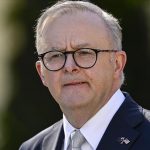




In the midst of a rapidly escalating conflict in the Middle East, Australian Prime Minister Anthony Albanese has declared that Australia supports the United States’ military action against Iran, framing it as a necessary measure to prevent Tehran from obtaining nuclear weapons and to mitigate broader threats to global security. In a joint statement with senior ministers, Albanese also underscored Australia’s political and moral support for the Iranian people in what he described as their “struggle against oppression”, even as he acknowledged the grave risks of further regional instability.
The comments, made on 28 February 2026, come against the backdrop of coordinated military strikes carried out by the United States and Israel against multiple Iranian targets, prompting international reactions ranging from cautious support to outright condemnation.
Albanese’s Statement: Support for U.S. Action and Iranian People
Prime Minister Albanese’s official communiqué articulated a robust endorsement of the U.S. response to what Canberra describes as an explicit security threat posed by Iran’s nuclear ambitions and proxy activities. “We support the United States acting to prevent Iran from obtaining a nuclear weapon and to prevent Iran continuing to threaten international peace and security,” the government statement affirmed.
Albanese’s remarks went beyond a narrow focus on nuclear proliferation, tying Australia’s stance to longstanding concerns about Iran’s regional policies. He described the Iranian regime as a “destabilising force” through its ballistic missile and nuclear programs, its support for armed proxies, and what he called its “brutal acts of violence and intimidation.”
In the same statement, the prime minister stressed that Australia stands with the “brave people of Iran in their struggle against oppression,” acknowledging internal repression and human rights abuses that have drawn international condemnation and sparked mass protests.
Historical Strains in Australia–Iran Relations
Australia’s position reflects a long period of deteriorating relations with Tehran. In August 2025, Canberra took the extraordinary step of expelling Iran’s ambassador and suspending operations at its embassy in Tehran after intelligence linked Iranian operatives to attacks on Australian soil in 2024. Australia also designated the Islamic Revolutionary Guard Corps (IRGC) as a state sponsor of terrorism.
These actions were preceded by earlier Australian condemnations of Iran’s human rights record, particularly in response to the violent suppression of domestic protests that drew global attention throughout 2025 and into 2026. Canberra had already imposed sanctions targeting individuals connected to human rights abuses.
Domestic Political Response and Opposition Views
Australia’s political leadership outside the government also weighed in. Opposition Leader Angus Taylor echoed the government’s condemnation of the Iranian regime, describing it as “authoritarian, antisemitic and abhorrent,” and reaffirming support for the Iranian people’s quest for freedom.
While the political consensus in Canberra appears broadly aligned on denouncing Tehran’s actions, there has also been discussion within Australian society and among civil society groups about the risks of military escalation and the need for diplomatic engagement, reflecting broader international debates over how best to balance security concerns with de-escalation efforts.
Regional Escalation and International Reactions
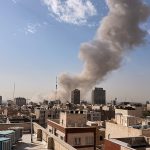
The United States and Israel’s military strikes on Iranian territory have rapidly altered the security landscape in the Middle East. Reports from Tehran and other Iranian cities indicate significant explosions and retaliatory actions against U.S. forces and allied positions, underscoring the potential for a protracted and volatile conflict.
International responses have been mixed. While countries such as Canada have echoed Australia’s support for the strikes, many European nations have urged restraint and diplomacy, warning that military action risks widening the conflict.
China and Russia have condemned the strikes as violations of sovereignty, and the United Nations has urged all parties to avoid escalation and protect civilian lives, reflecting deep international concern over the crisis.
Travel Advice, Security, and Consular Assistance
In light of the rapidly deteriorating situation, the Australian government has updated its travel advice for regions affected by the conflict. Citizens have been urged not to travel to Iran, and those already there are advised to leave as soon as it is safely possible. Similar warnings have been issued for Lebanon and Israel, where military activity has raised safety concerns.
Australia’s Department of Foreign Affairs and Trade has activated its Crisis Centre to provide support to Australians in the region and facilitate consular assistance as needed.
Balancing Security, Diplomacy and Human Rights
Australia’s statement reflects a nuanced policy stance that intertwines support for allied military action with a moral assertion of solidarity with oppressed populations. By linking its backing of U.S. strategic objectives to concerns about human rights abuses inside Iran, Canberra underscores its dual emphasis on security and ethical foreign policy principles.
Nevertheless, the approach also places Australia firmly alongside key Western allies in a fraught geopolitical conflict, amid warnings from some international partners about the dangers of further escalation. As the situation continues to evolve rapidly, Canberra’s diplomatic engagements and public statements will be closely watched by allies and critics alike.
Conclusion
Prime Minister Anthony Albanese’s declaration that Australia supports U.S. action against Iran marks a significant statement in Australia’s foreign policy, one that aligns Canberra with broader Western strategic interests while also professing solidarity with the Iranian people’s struggle for freedom. As military hostilities deepen and the risk of broader regional conflict persists, the government’s stance reflects both enduring security concerns and a broader ideological position on human rights and international stability.
7 years in the field, from local radio to digital newsrooms. Loves chasing the stories that matter to everyday Aussies – whether it’s climate, cost of living or the next big thing in tech.